Monday, April 18, 2016

Creating End of Life Plans with Patients


The article
Recently the results of a national poll conducted by the John A. Harper foundation in order to determine what  was preventing physicians from having conversations with patients about end of life care. The poll revealed some of the barriers that can prevent or cause difficulty to discussion of end of life care, which includes hospice, DNR, and living will information. 99% of the respondents reported that they felt it was important for physicians to have these conversations with their clients, but almost half to the doctors reported that they felt unsure of what to say, and only 1/3 reported that they had ever received any training on what to do or say during these conversations.  The results also showed that Medicare coverage for these end of life meetings offers incentive for the physicians to have the conversation with their patients but only 14% of respondents had ever billed for it  and 75% said new benefits would help to incentivize discussing end of life care. Another interesting finding is that physicians who had been trained to discuss end of life care were more likely to know what to say, and to find discussions about end of life care rewarding.  The press release of the results can be found here http://www.jhartfound.org/blog/talking-with-patients-about-end-of-life-care-new-poll-reveals-how-physicians-really-feel/

The Issue

The issues of end of life care are extremely important because these decisions will greatly impact the patient's care received and the way that they plan out the rest of their lives. I have known many people who were receiving treatment for diseases and disorders and their care and interactions between themselves and the health care professionals began to change and it was later revealed to them that their condition was terminal. This is also something that is important as the baby boomers continue to age, because we may end up with a very high population of very old adults who do not have a plan that medical professionals can follow when they are coming to the end of their lives. By changing the way that the health care profession deals with end of life care, we can make the exchange more comfortable for physicians and patients and increase the transparency between doctors and patients as well as more easily allowing for clients to begin planning for their lives and all of the aspects of their advanced care.


Service Delivery
There are currently policies in place in order to cover discussions of end of life care. However, the results of this poll show that these policies are not currently working. Medicare will cover a physician to discuss end of life planning but only 15% of doctors reported that they had ever used this code to bill for services, and 75% said that new billing policies for this would make it easier for them to discuss end of life care with patients.  This information suggests we need to make changed to the way that this service is billed and reimbursed. 

The results of the poll also showed that 1 in 4 doctors reported that there is no place in the electronic health record to show if the patient even has an advanced care plan, and that only half said that they had access to this information if they were able to see that there is an advanced care plan. Making changes to the electronic record could make it much easier for health care providers to know that there is a plan and having access to the information could make it much easier for all of the clinicians treating the client to know even more about their care plan.  By adding it to the electronic record this could also become a standard part of the individual's care and can help to make the conversation easier and less taboo, both the patient and the doctor can have an understanding that making these decisions is a standard part of care that everyone does.  If end of care planning does not becomes a standard part of care, making policies that will require health care providers to go to classes or training sessions to be better prepared to discuss the topics of end of life care will be important.

How can we support the creation of policy
Showing the importance of end of life care for the proper care of the patient will help to support the creation of policy. In addition to this the John A. Harper foundation reported a public opinion poll about end of life planning which showed that the public is also very unhappy with the way that these services are being provided currently. Having both concerned members of the public as well as physicians can make it easier to gain support through letter writing and lobbying politicians in order to make changes to the policies that govern these practices.


Implications for OT

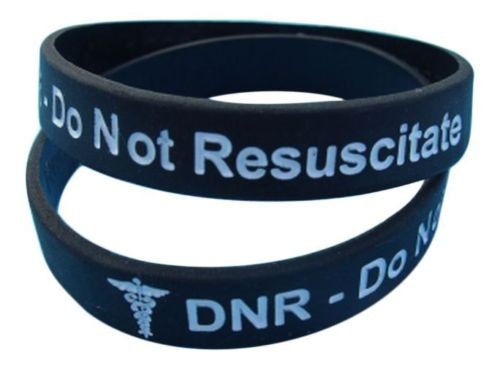
Occupational therapists can be involved in end of life care. Many Americans are opting to live the end of their lives in the home and it may be up to the OT to provide rehabilitation and in home care that can allow these patients to live at home comfortably. This means that the OT will need to be knowledgeable about the patient's advanced care directives as well as needing to have a level of comfort and education about providing care for someone at the end of their lives. The OT will also need to know what services can and cannot be provided to the individual if they have a DNR or other aspect of the advanced care plan.  OTs also treat in hospice settings where these plans and directives will be very important, though the patients in a hospice setting will most likely already have their end of life plans in place.

Monday, March 28, 2016

Using Diabetes Prevention to Reduce Costs and Improve Outcomes


NPR recently published a story titled "Diabetes Prevention Program Will Save Medicare Money, HHS Says."  The article can be found here http://www.npr.org/sections/health-shots/2016/03/23/471583523/hhs-says-diabetes-prevention-program-will-save-medicare-money This story provides some brief information about a YMCA program that was created to prevent diabetes through educating individuals who are in a prediabetic stage.  This is a year long program in which individuals need to apply and be qualified for enrollment. Once in the program, there is a 16 week education portion of the program where the client attends a weekly session and then attends monthly follow up sessions for the remainder of the year. More information regarding this program and the risk factors that qualify individuals can be found at the YMCA website https://www.ymcapkc.org/diabetesprevention/  NPR reports that the YMCA has had 42,000 participants who lost an average of 5.5% of their body weight, which can significantly reduce the risk of Diabetes and a number of other health issues. The department of Health and Human Services audited this program and found that the results qualify this program for coverage by Medicare through the Affordable Care Act (ACA).

The Issue
Type 2 Diabetes is becoming a more and more prevalent issue as the population of the United States continues to live sedentary lifestyles and obesity becomes more common. Diabetes has many complications, and can lead to a number of issues. Medical spending for patients with Diabetes is costly, according to the article "One of every three Medicare dollars is spent on patients with diabetes…" By providing education and preventative care for Diabetes spending can be reduced and the overall health of the participants and the population can be improved.

Service Delivery
Several systems already exist in order to deliver this intervention. The YMCA is a nationwide organization that offers health and wellness programs in communities. By having this program in YMCAs across the country it can be made available to communities in diverse areas and to populations through an organization that already exists and is trusted by the individuals in the community.

 The ACA is a law that regulates health care and the way it is provided to the public, according to the law prevention programs can qualify for Medicare coverage. This means that participants should be able to attend this program at no cost to them, if they qualify for the service. This can be overseen by the Department of Health and Human Services in order to be sure that Medicare is taking the appropriate steps to reimburse facilities for providing this service.

Because this is the first preventative program to qualify for health care coverage, there will need to be new systems created in order to deliver this intervention through Medicare. A reporting system will need to be created, as well as a method to monitor the claims being made to Medicare using the procedures that already exist.

How can we support the creation of policy
Sharing the results of this program reported by the YMCA and HHS can help to support the creation of policy.   Many medical facilities try to use evidence based practice, seeing these results could encourage more widespread changes in the way preventative care for Type 2 Diabetes is provided, in order to cause a greater effect on clients as well as reducing costs to insurance. This is also the first preventative program to meet the requirements for Medicare coverage that are described in the ACA, which means it will be important to follow up with the facilities to ensure that reimbursement is occurring and that service delivery is occurring properly. If there are issues in reimbursement or delivery, there may need to be additional policies created.


Implications for OT

Occupational therapists often work with the diabetic population at many different stages in the disease from the initial stages where the individual is learning how to cook appropriate meals and learning how to manage medications to the later stages where the individual may experience effects such as neuropathy that can lead to issues including amputation.  These issues can be avoided for many patients through prevention. A more wide spread effort for prevention could reduce the number of patients requiring OT services because of Diabetes or Diabetes related complications to health.


An OT can also be used within this program as one of the leaders responsible for providing intervention.  OTs are well qualified to assess current barriers to success and provide ways to overcome these barriers as well as giving education and support resources. An OT would be able to work with the participants of this program in order to learn the information and skills that can help them to be healthier and prevent type 2 Diabetes rather than working to help overcome the issues of diabetes later.

Monday, February 29, 2016

Nursing Home Evictions: What this could mean for OT

Nursing Home Evictions: What this could mean for OT

Recently NPR ran a story discussing evictions from nursing homes and that this is causing patients to have costly hospital stays. The story focuses on one individual, Bruce Anderson, who began living in a nursing home after he suffered a brain injury due to oxygen loss during a heart attack. He had lived in a California nursing home until he was hospitalized for pneumonia. After his hospitalization, the nursing home told Anderson’s family that he would not be allowed to return to his home this has led to Anderson living in the hospital for 9 months. To read or listen to the original story follow this link: http://www.npr.org/sections/health-shots/2016/02/25/467958665/nursing-home-evictions-strand-the-disabled-in-costly-hospitals


The Issue
There are federal laws in place that are supposed to protect nursing home residence from being forcibly removed from their homes and placed into hospital care; this includes refusing to allow patients back into their home after a short hospitalization. Unfortunately these laws are not being enforced; there are no measures in place that will penalize these actions. Even when the state of California ruled that Anderson needed to be allowed back into his home, the nursing home did nothing.  This is an issue not only for individuals and their families but taxpayers as well, who are going to be responsible for covering the much more expensive cost of a long hospital stay rather than a nursing home.

System that should address the issue
The federal laws that have been put in place are not being enforced at the state level, this means it is necessary for federal enforcement of the laws. The Department of Health and Human Services Office of Civil rights is responsible for enforcing items such as HIPPA, and discrimination violations and this issue should be treated similarly.  The elderly and disabled are an at risk population and if laws are not being upheld at a state level, laws must be created instituting a penalty that will be enforced by the Office of Civil rights.  

It is also important to note that one potential reason to evict a client is to replace a client who requires a great deal of time in terms of care and services with an individual who requires less time and services and is therefore a more lucrative client; nursing homes may also be turning out Medicare and Medicaid clients, who bring in less money, in hopes of filling that space with someone who will be using private insurance and bringing in more money. This is discrimination based on a disorder or socioeconomic status and it is within the scope of DHHS to step in.  


How can we support the creation of this policy?
Data needs to be collected in order to determine exactly how frequent this occurrence is, according to NPR there are between 8,000 and 9,000 patients that make this complaint annually. It will then be important to look at the costs that were created as a direct result of the eviction through long-term hospitalizations compared to what would have been spent in skilled nursing.  It is also important to look at the quality of life of these individuals who are being displaced from their homes.


Implications for OT
Evicting individuals from a nursing home may be completely barring them from receiving appropriate OT services. In the NPR article the focus was on Bruce Anderson; using this example of an individual who suffered an anoxic brain injury four years prior, this patient will not be appropriate for receiving OT in a hospital setting where the goal is to have an individual medically stable and prepared to transfer into their homes. In a hospital setting the priority will be given to individuals who have a medical need for OT services, and Bruce will receive very little enrichment or stimulation. Little enrichment or opportunity for occupation means that Bruce will have very little opportunity to perform meaningful occupations, this can negatively affect his sense of self and his quality of life. The same would be true of other patients who is displaced and required to stay in the hospital unnecessarily. In addition to this, depending on the presentation of Bruce’s injury he could begin to lose the ability to perform movements or specific tasks because he spends so much time sedentary.


If Bruce does qualify for OT services in the hospital, the resources necessary for him to practice his activities of daily living may not be readily available or the setting may be so different that any of the skills learned will not carry over to his home outside of the hospital.  For the therapist, this would also mean working with a client who is medically stable and this could take time away from patients who are in need of more intensive therapies. For the OT this also means working with an individual who is very dissatisfied with their environment and living situation. If Bruce were in a nursing facility he would be able to receive enrichment and OT services that can help to increase his ability to be independent as well as offering some meaning and enjoyment to his daily life. Having these patients placed in more appropriate long-term care is also helpful for practitioners who can create a more appropriate treatment environment and will be better able to address the needs of their whole clientele.

Tuesday, February 9, 2016

Health Care Costs and Low Income Families

The Henry J. Kaiser Family Foundation recently published an article titled "Health Care Spending Among Low-Income Households with and without Medicaid" http://kff.org/medicaid/issue-brief/health-care-spending-among-low-income-households-with-and-without-medicaid/ This article takes a look at the amount of the total household income spent on medical costs. The affordable Health Care Act made it so that families are covered by Medicaid so long as they are at or below 138% of the federal poverty level, according to the article that means an income of $27,310 for a family of 3 in 2014.   For families that have an income this low, the priority for spending is on food and if the family does not qualify for Medicaid they may not be able to afford other kinds of health coverage.   The article looked at the differences in spending habits between families that have Medicaid benefits vs families that do not have Medicaid benefits. I have inserted the pie chart of their findings below 


The issue: In looking at this data you can see that low income individuals such as those who are on a fixed income or receive social security and those who are unemployed or single income families have to make decisions about how their money is spent. When the health care spending increases, there is less money that can be spent on food and housing. This also means that these families are probably prioritizing their medical spending on things that are medically necessary. The researchers also suggest that individuals that have no health coverage are more likely to postpone receiving health care as well as going without care because of costs, this could be incredibly detrimental to young children who are in need of early interventions because this could slow their entire developmental trajectory.

How can we fix this issue: Changes need to be made at a nationwide level affecting policy. Expanding the individuals who receive healthcare coverage for free or at a lower cost can lead to a decrease in medical spending by the family, ensuring that there is money for food and housing  as well as ensuring that there is money for interventions that are not only medically necessary but interventions that may improve their quality of life or improve everyday functioning such as Occupational Therapy.

In order to prove that this works there should be research done to see how the spending habits of families change after they receive health care, data can also be collected regarding the types of care individuals receive and the amount of preventative care that they receive as well as how long they go without care. While this data has been collected in a number of studies, as Medicare is expanded this information could be taken using the same families.


What does this mean for OT: Occupational Therapy is not always considered to be "necessary" this means  that this could be one of the services that families elect to go without when they are unable to pay. Expanding Medicare could expand the availability of Occupational Therapy. This also means that without Medicare coverage Occupational Therapy could be out of reach for many individuals who have low income.